
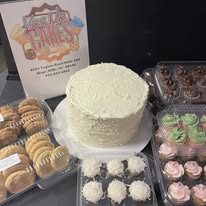
Choose a tiered cake when the centerpiece and traditional cutting moment matter most; a cutting cake when the couple wants that moment with a smaller display; cupcakes when simple portioning and guest flow matter; and a dessert table when variety is a major priority. Many Hope Mills weddings use a combination.
Start with the experience, not the product name
Couples often begin with “we need a wedding cake,” but the real question is what they want dessert to do. Is it the visual centerpiece? A ceremonial cutting moment? The main dessert for every guest? A self-serve station? A way to offer several choices? Those goals can point to different formats.
Write down the three highest priorities before requesting quotes. Examples include a dramatic display, easy service, variety, a traditional photograph, minimal cleanup, or a format that travels well. Then compare formats against those priorities.
When a tiered wedding cake makes sense
A tiered wedding cake is usually the strongest visual statement. It can anchor the dessert table, create a traditional cutting moment, and connect the reception design through color, texture, florals, toppers, and height.
Its strengths also create responsibilities. The venue needs a stable display area. Serving requires a cutting plan. Transportation and setup may be more involved. The couple must confirm whether all tiers are intended for serving, how portions will be calculated, and who handles the stand, flowers, topper, placement, cutting, and leftovers.
A tiered cake is a good fit when presentation matters enough to justify careful logistics—not simply because it is the default wedding image.
When a cutting cake is the smarter centerpiece
A cutting cake is a smaller display cake used for the ceremonial cutting and photographs while additional servings come from another source. It can preserve the wedding-cake moment without requiring the display cake to provide every serving.
The couple should still ask how many servings the cutting cake provides, what other desserts will cover the guest count, where those desserts will be stored, and how the venue will serve them. A smaller display does not automatically solve every logistics problem; it shifts some of the service plan elsewhere.
When cupcakes improve serving and guest flow
Cupcakes provide visible portions and can reduce the need for continuous cake cutting. They work well when guests will move through the reception at different times, when dessert is self-serve, or when the couple wants to offer more than one variety—subject to what the bakery confirms.
They still require planning. Count the quantities, display space, stands or trays, labels, napkins, boxes for leftovers, and who replenishes the table. Outdoor conditions and direct sunlight can affect cupcakes just as they affect cakes, so the venue location matters.
When a dessert table earns the space
A dessert table can create choice and visual abundance through a mix such as cake, cupcakes, cookies, bars, or other items the bakery actually offers. It is useful when the couple wants guests to sample, when the reception has a long social period, or when dessert is part of the décor.
Variety increases coordination. Each item needs a quantity, display container, label, serving utensil when applicable, storage plan, allergen conversation, and cleanup plan. The table also needs enough room so guests can choose without crowding the cake-cutting area.
Compare the formats side by side
| Format | Strongest advantage | Planning questions |
|---|---|---|
| Tiered wedding cake | Traditional centerpiece and strong visual impact | Servings, structure, display, cutting, transport, setup, flowers, and stand |
| Cutting cake | Ceremonial moment with a smaller display | What supplies remaining servings and how they will be served |
| Cupcakes | Clear portions and flexible guest flow | Quantity, display capacity, replenishment, labels, and leftovers |
| Dessert table | Variety and a full guest experience | Item mix, quantities, table space, utensils, labels, storage, and cleanup |
| Combination | Balances ceremony, servings, and variety | How every component works together without duplication or shortage |
Use guest count as a system, not a guess
For any format, determine how many people are expected, how many will likely eat dessert, whether there are children, whether other food follows, and whether the couple wants leftovers. A dessert table with four choices does not mean every guest needs one of each item, but the mix still needs a deliberate quantity plan.
The Hope Mills cake serving-size guide and cupcakes and desserts planning guide can help couples prepare a clearer question for the bakery.
Match the format to the venue
Ask the venue how much dessert-table space is available, who sets it up, when setup can begin, whether the table can remain in a temperature-controlled room, and who cuts or serves. A format that looks simple online may be difficult in a narrow room, outdoor pavilion, secured location, or venue with a short vendor-access window.
Hope Mills and Fayetteville-area couples should also consider travel distance, parking, stairs, elevators, and the route from the vehicle to the display table. The format must survive the handoff, not just the bakery counter.
Understand the cost drivers without assuming prices
Price can be affected by servings, design labor, structure, decoration, item variety, packaging, setup, travel, and the number of individual pieces. A dessert table is not automatically cheaper because it avoids a large cake; many individual items can require substantial labor and display preparation.
Send one complete request so the bakery can compare formats using the same guest count, venue, design level, and service expectations. The custom cake pricing guide explains why a quote depends on the actual scope.
Build a combination intentionally
Combination plans can be powerful when each component has a job. For example, a display cake may handle the ceremony, cupcakes may handle straightforward portions, and a smaller cookie selection may add variety. The plan becomes weak when items are added without adjusting total quantities or table space.
Give each component a purpose, then check the total servings, display footprint, serving tools, labels, leftovers, and responsible person.
Discuss the options with a local bakery
Couples can use the complete Hope Mills wedding cake planning guide to gather the venue and guest information needed for this comparison. Then review the cake and dessert examples on the Kiss Me Cakes bakery homepage for Hope Mills weddings and celebrations.
The bakery must confirm which formats, quantities, designs, and arrangements are available for the specific date. The strongest request explains the event first and lets the format follow.
Before you order: Wedding dates, product options, flavors, pricing, payment, pickup, delivery, setup, storage, and venue arrangements must be confirmed directly for the specific request. An online guide or request form does not reserve a date.
Test the choice against a real Hope Mills wedding schedule
Before choosing the final format, walk through the reception in order: vendor entry, photographs, guest arrival, dinner, cake cutting, dessert service, dancing, and cleanup. A tiered cake may be ideal for a formal cutting moment; cupcakes may serve guests more smoothly when dessert opens over a longer period; a dessert table may need an attendant during a crowded reception.
Use the complete wedding cake planning guide for Hope Mills couples to connect the dessert format to the venue, serving plan, transportation, and written confirmation. For a Hope Mills wedding, the best format is the one that works at the actual venue—not the one that looks simplest in a photograph.
Common questions
Is a cutting cake the same as a full wedding cake?
A cutting cake is usually a smaller cake used for the ceremonial cutting and photographs. The couple must plan how the remaining guests will receive dessert.
Are cupcakes easier than a wedding cake?
They can simplify portioning, but they still require quantity planning, display space, transport, labels, protection from heat, and a plan for leftovers.
Is a dessert table automatically less expensive?
No. Cost depends on quantities, item variety, labor, decoration, packaging, display needs, and setup. The bakery must quote the actual plan.