
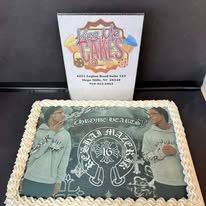
Start with the number of people you truly expect, decide whether cake is the main dessert, then ask the bakery to confirm the cake format and serving estimate for the design you choose.
Guest count is the starting point—not the final answer
Begin with the number of people who are likely to attend, not the maximum number invited. Then separate adults, children, vendors, and anyone who may leave before dessert. A realistic guest estimate gives a Hope Mills bakery a stronger starting point than a vague statement such as “It is a medium party.”
Next, decide whether every guest should receive cake. At a birthday dinner, cake may be the main dessert and nearly everyone may expect a slice. At a wedding or large community event with cupcakes, cookies, brownies, cheesecake, or another dessert station, cake may be only one part of the sweet table. Tell the bakery how dessert will actually be served so the recommendation reflects the event instead of a generic head count.
Slice size changes the number of servings
Two people can cut the same cake and produce very different totals. A generous family-style slice uses more cake than a smaller event slice. Professional serving charts often distinguish between larger party portions and smaller wedding-style portions. Wilton’s current serving guide, for example, uses approximately 1½-by-2-inch party slices and 1-by-2-inch wedding slices, while warning that actual servings vary.
That difference matters. Before accepting a serving estimate, ask what slice size the estimate assumes and who will be responsible for cutting. A venue employee who routinely cuts tiered cakes may produce consistent event portions. A family member cutting casual wedges may produce fewer, larger servings. The correct cake size must match the cutting plan.
Shape, height, and structure matter
Do not judge servings only by the cake’s diameter. Round, square, sheet, sculpted, and tiered cakes divide differently. Two cakes with a similar footprint may not yield the same number of usable portions. Height can affect how the cake is designed and cut, while supports, decorative structures, or carved sections may reduce the portion of a highly customized cake that is intended for serving.
Ask the bakery to state the estimated servings for the exact cake being discussed. A photo of a large-looking cake online does not tell you its internal structure, slice plan, or true yield. The bakery’s estimate for the final design is more useful than guessing from an inspiration photo.
Use a three-number planning method
For a practical request, prepare three numbers:
- Expected attendance: the realistic number of people likely to be present.
- Minimum servings: the number of guests who must receive cake without relying on other desserts.
- Comfortable servings: the amount that allows for larger cuts, a few extra guests, seconds, or leftovers.
These numbers help the bakery understand your risk tolerance. A small family gathering may welcome leftovers. A school, military, church, office, or community event may need tighter portion control. State which result matters more: minimizing waste, making sure nobody misses cake, or preserving extra slices for the host.
Count the rest of the dessert table
If you plan to serve cupcakes, cookies, brownies, cheesecake, dessert cups, or other sweets, list them in the cake request. Do not simply say “there will be other desserts.” Give the bakery a rough quantity and explain whether guests can choose one item or sample several.
Individually portioned desserts can make quantity planning easier because each item represents one clear serving. They can also protect the decorated cake from being oversized only to cover uncertain attendance. A mixed dessert plan may let the cake serve the ceremonial or visual role while cupcakes or cookies handle part of the guest count. The final balance should be confirmed with the bakery based on what is actually available for your date.
Plan for children, second helpings, and no-shows
Children do not always need a full adult portion, but they may be more likely to choose cupcakes or return for a second small sweet. Adults may skip dessert after a heavy meal, while guests at an afternoon party may eat more because dessert is the main food attraction. There is no universal percentage that fits every event.
Think through your specific crowd. If the celebration includes a large meal, multiple desserts, and a short cake service, you may need fewer full-size cake portions. If it is an open-house celebration where guests arrive throughout the day, packaging and replenishment may matter more than a single cutting moment. Share the event format instead of asking the bakery to guess.
Make a cutting plan before celebration day
A serving estimate is only useful when the cake is cut accordingly. Choose a person who will cut the cake, provide a stable work surface, and make sure the correct knife, server, plates, napkins, and containers are available. For a tiered or specialty cake, ask whether there are supports or non-edible elements the cutter should know about.
Do not wait until guests are standing in line to decide how large each slice should be. Ask the bakery whether it can explain the recommended cutting pattern for the selected cake. A simple plan can prevent the first few oversized slices from leaving too little for the final guests.
A serving request checklist for Hope Mills events
- Expected attendance and minimum servings needed
- Adults, children, and any vendors or staff being served
- Whether cake is the main dessert or part of a larger dessert table
- Other desserts and approximate quantities
- Preferred cake style, shape, and design direction
- Whether leftovers are welcome or should be minimized
- Who will cut and serve the cake
- Venue rules, serving time, and access to refrigeration if needed
- Pickup date, event date, and transportation time
Use this information to start the conversation, then let the bakery confirm the serving estimate for the actual design. Do not treat an online chart as a guarantee for a custom cake.
Requesting the right amount from Kiss Me Cakes
When contacting Kiss Me Cakes, include your event date, realistic guest count, minimum servings, occasion, design direction, and any other desserts you plan to serve. The bakery can then review availability and discuss the cake or dessert format that fits the request.
Submitting a request does not reserve a date or guarantee a specific cake size. Final servings, design, pricing, payment, pickup timing, and availability must be confirmed directly with Kiss Me Cakes.
Serving-chart reference: For a general explanation of party and wedding slice sizes, review Wilton’s cake serving guide. Use it as a planning reference only; ask the bakery to confirm servings for your exact cake.
Common cake-serving questions
Should I order cake for every invited guest?
Plan around realistic attendance and how dessert will be served. Tell the bakery whether cake is the main dessert, whether other sweets are available, and whether you want extra servings or leftovers.
Why can the same cake have different serving estimates?
Slice size, shape, height, structure, and cutting method can all change the yield. Ask which portion size the estimate assumes.
Can cupcakes cover extra guests?
They can provide clearly counted individual portions, but availability, quantities, flavors, and the final dessert mix must be confirmed with the bakery.
Related planning resource
Need a mixed-dessert count instead? Use the dessert-table quantity guide.