
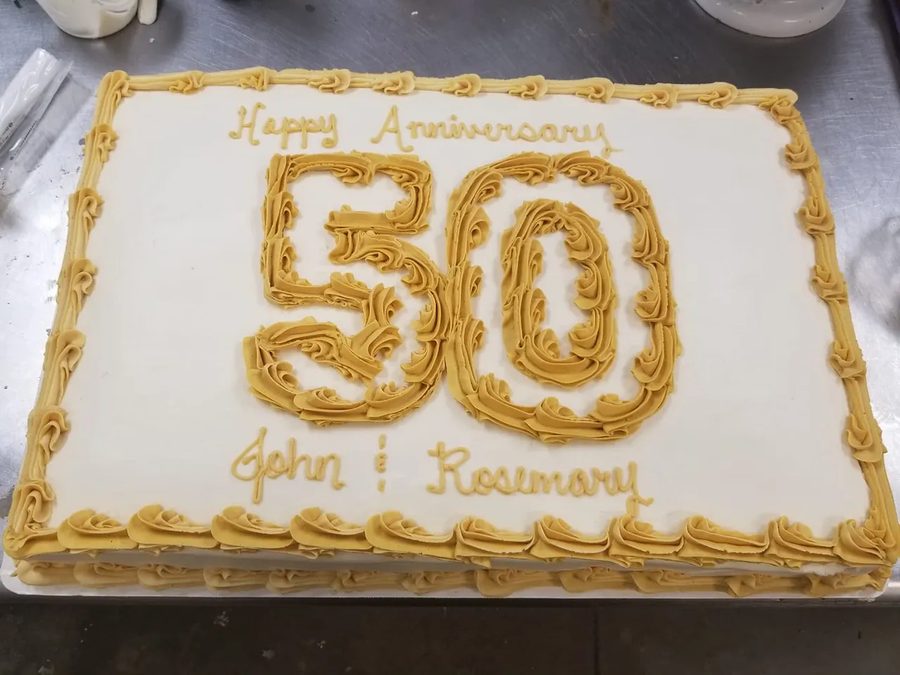
Choose the cutter, serving location, tools, portion goal, and cleanup plan before guests arrive. A beautiful cake can still create delays or waste when nobody knows who will cut it or how servings will be handled.
Decide what the cake-cutting moment should accomplish
Some celebrations treat cake cutting as a major photo moment. Others need dessert served quickly so the program can continue. Decide whether the priority is ceremony, speed, equal portions, easy self-service, or a combination of those goals.
For a birthday, the cake may need time for candles, singing, photos, and family attention before anyone cuts it. At a school, church, military, workplace, or community event, dessert may need to move through a larger group without interrupting the schedule. Your serving plan should match the event instead of assuming every cake will be handled the same way.
Confirm what the bakery means by a serving estimate
Cake servings are estimates, not automatic outcomes. The actual number depends on the cake’s size, shape, height, construction, and the dimensions of each slice. A person cutting generous party slices may produce fewer servings than someone following a smaller event-style portion.
Ask what serving estimate applies to the specific cake being discussed and whether the design changes how it should be cut. Use the cake serving guide for Hope Mills parties to organize guest-count questions, but do not copy a random chart online and assume it matches the bakery’s product. The bakery should confirm the estimate for the order, while the host should decide whether the event needs extra portions for seconds, unexpected guests, or large slices.
Match the serving plan to the full food menu
Guests may take different amounts of cake depending on when dessert is served and what else is available. A cake served after a full meal may be cut differently from cake served as the main refreshment at an afternoon gathering. A dessert table with cupcakes, cookies, or other sweets can reduce the number of guests choosing cake, but only when the quantities are planned together.
Consider children and adults separately, note whether guests are likely to return for seconds, and decide whether leftovers are welcome. The right plan is not always the smallest order that could technically cover the guest list. It is the plan that fits real guest behavior without creating unnecessary waste.
Name the cutter and at least one helper
Do not wait until the cake is on the table to ask who is comfortable cutting it. Assign one person to cut and another to handle plates, napkins, utensils, decorations, trash, and the serving line. For a larger event, a third person may be useful for carrying finished plates or directing guests.
The cutter should arrive before dessert service, know where the tools are, and understand whether the cake includes tiers, supports, decorative pieces, toppers, or sections that should not be cut. A volunteer who has never seen the cake should not be forced to figure everything out in front of a waiting crowd.
Prepare the right tools before the event starts
A serving station may need a long knife, a smaller knife, a cake server, a clean cutting surface, plates, forks, napkins, gloves if appropriate, paper towels, a damp cloth, trash access, and containers for leftovers. The exact tools depend on the cake and venue.
Keep a clean towel or warm-water setup available if the cutter needs to wipe the blade between cuts. Use tools that are sturdy enough for the cake without being oversized or unsafe in a crowded area. Confirm venue rules before bringing knives into schools, workplaces, military facilities, or public buildings.
Inspect toppers, supports, and decorations before cutting
Decorated cakes may include items that should be removed before serving. These can include toppers, picks, ribbons, plaques, structural supports, dowels, display pieces, or non-edible decorations. Never assume every visible item is edible.
Ask the bakery what needs to be removed and how the cake is constructed. At pickup, make sure the person receiving the order understands any handling guidance. At the event, place removed items where children cannot grab them and where they will not be mixed into served portions.
Use the first few cuts to establish a consistent portion
The first slices set the standard for the rest of the cake. Before serving guests, decide the approximate width and depth of each portion. Cut a small group of sample servings, compare them, and adjust before the line begins.
Consistency matters more than perfection. If the first slices are very large, the remaining cake may not cover the guest count. If they are too small, guests may immediately return for seconds and slow the line. A steady portion size gives the host better control over the available servings.
Build a serving line that does not block the celebration
Place the cake table where the cutter has room to work and guests can approach without crowding the gift table, entrance, photographer, DJ, children’s area, or main food line. Keep extra plates and forks within reach but away from the cutting surface.
For large gatherings, consider cutting several portions before inviting guests forward. Another option is to have helpers carry plates to tables. The right choice depends on the room, guest mobility, event schedule, and whether the cake needs to remain visible for photos before service. For Hope Mills school, church, military-family, workplace, and community celebrations, match the serving method to the room rules and available volunteers.
Plan separately for tiered cakes, sheet cakes, and mixed desserts
Different formats create different serving jobs. Before finalizing the service plan, compare the practical differences in the cake, cupcakes, cookies, and dessert-table guide. Sheet cakes may be straightforward to portion, while tiered cakes can require removing upper sections or supports. A small display cake paired with cupcakes or other desserts may reduce cutting but requires clear labels and quantity control.
If several desserts are offered, decide whether guests should choose one item or sample multiple items. Without that direction, the first guests may take several portions and leave too little for the rest of the room. Signs, announcements, or servers can prevent confusion without making the dessert table feel restrictive.
Protect guests with ingredient and serving information
When ingredient concerns exist, keep the bakery’s information with the order and make sure the serving team knows what has and has not been confirmed. Do not promise that a cake is safe for an allergy simply because a flavor name sounds acceptable.
If different desserts have different ingredients, use separate utensils and avoid moving labels. Cross-contact can happen at the event even after the bakery has answered questions. The host is responsible for maintaining clear information during display and service.
Decide how seconds and leftovers will be handled
Tell guests when seconds are available instead of letting the serving line empty the cake before everyone has been offered a first portion. Assign someone to watch the remaining quantity and release extra servings at the appropriate time.
Prepare containers, foil, bags, or boxes before the event if leftovers will be saved. Identify who will take them, where they will be stored, and whether the dessert requires refrigeration. Do not leave that decision until the venue is closing and volunteers are trying to clean the room.
Avoid the most common serving failures
- No designated person is willing to cut the cake.
- The knife and serving tools are missing or unsuitable.
- Non-edible decorations are not removed.
- Early slices are much larger than the serving estimate assumed.
- The cake table is crowded by gifts, children, or photography equipment.
- Guests take several desserts before everyone is served.
- No containers or storage plan exists for leftovers.
- The pickup person never passed handling instructions to the event team.
A ten-minute serving discussion before the party can prevent nearly all of these problems.
Include serving details when you contact the bakery
Share the event date, guest count, food schedule, dessert format, venue type, and who will handle cutting. Ask for the serving estimate that applies to the actual order and whether there are special cutting or decoration-removal instructions.
For current bakery information, photos, contact options, and the request path, see cakes, desserts, and request options from Kiss Me Cakes in Hope Mills. The bakery must confirm the order details; this guide helps the host prepare to serve it successfully.
Common cake-cutting and serving questions
Should the bakery serving estimate be treated as exact?
No. It depends on how the cake is cut. Confirm the estimate for the specific cake and plan portions around the guest list and event.
Who should cut a tiered cake?
Choose someone comfortable following the bakery’s handling instructions. Make sure that person understands supports, toppers, and the serving plan before guests line up.
When should guests be offered seconds?
After everyone who wants dessert has had a reasonable opportunity to receive a first portion. Assign someone to watch the remaining quantity.