
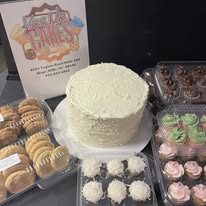
Choose the dessert format by event logistics first and appearance second. A centerpiece cake, individually portioned cupcakes or cookies, or a mixed dessert table each solves a different problem.
Start with how dessert will be served
Before choosing a cake style or dessert theme, picture the actual serving moment. Will everyone sit down together? Will guests come and go over several hours? Will a volunteer be cutting cake? Will children serve themselves? Will the dessert table be indoors, outdoors, or moved between locations?
A traditional cake works well when there is a clear cake-cutting moment and someone is prepared to portion and serve it. Cupcakes and cookies are easier when guests need to grab an individual item without waiting. A mixed dessert table gives people variety, but it requires more display space, labels, replenishment, packaging, and quantity planning.
When a centerpiece cake makes sense
A decorated cake creates a strong focal point for photos, candles, announcements, and ceremonial moments. It can carry a theme, colors, names, ages, logos, or event details in a way that smaller desserts may not. That makes cake a natural choice for birthdays, anniversaries, graduations, weddings, retirements, promotions, and other milestones.
The tradeoff is service. Someone must cut the cake consistently, handle supports or decorative pieces correctly, provide plates and utensils, and keep the serving line moving. The serving estimate also depends on slice size and the person cutting it. If the event has no clear serving plan, a large cake can become a bottleneck even when it looks impressive.
When cupcakes are the practical choice
Cupcakes provide a clearly counted individual portion. They reduce cutting work, allow guests to serve themselves, and can be easier to distribute across classrooms, offices, team areas, church tables, or community stations. They also make it easier to separate flavors or decoration styles when the bakery can offer those options.
Cupcakes still require planning. They take more table surface than a single cake, need stable transport, and can be affected by heat or movement. If they are displayed for a long period, consider how they will be covered, replenished, and protected from direct sun, wind, children, or crowded traffic.
When cookies are stronger than cake
Decorated or bakery cookies can be useful when guests need a portable dessert, the event has no formal cutting time, or the host wants items that are easier to package individually. Cookies can work well for open houses, school events, meetings, welcome tables, appreciation events, and take-home favors.
They can also support a theme through shapes, colors, wording, or packaging, depending on what the bakery can make. The important questions are quantity, size, packaging, display, ingredient concerns, and whether the cookies are meant to be eaten at the event or carried home.
When a mixed dessert table earns the extra work
A dessert table is valuable when variety is part of the guest experience. A smaller decorated cake can provide the centerpiece while cupcakes, cookies, or other available sweets provide additional portions. This can help hosts serve different preferences and create a fuller visual display.
But variety can create waste if every item is ordered as though every guest will take one of each. Plan the table as a system. Decide which item is the main dessert, which items are supporting choices, and whether guests are expected to sample several. Then estimate quantities around that behavior instead of simply multiplying the guest count by every dessert type.
Use guest flow to make the decision
For a seated dinner, a cake-cutting plan may be easy to manage. For a drop-in reception, cupcakes or cookies may be easier because guests arrive at different times. For a large community event, individually portioned items may reduce lines. For a small family gathering, a cake may be the simplest and most memorable choice.
Think about accessibility too. Children, older guests, people carrying bags, and guests moving through a crowded room may handle individually portioned desserts more easily than plates with cut cake. If the event includes a long program, make sure the dessert plan works with the time people will actually eat.
Compare the hidden work—not just the display
Every format has labor behind it. Cake requires cutting and serving. Cupcakes require more individual placement and transport space. Cookies may need packaging. A dessert table may require risers, trays, labels, tongs, napkins, boxes for leftovers, and someone to watch the display.
Write down who is responsible for pickup, transport, setup, serving, replenishment, cleanup, and leftovers. A format that looks simple online may create more work at the venue. The right choice is the one your event team can execute cleanly.
Ask for a quote using one clear priority list
Tell the bakery your event date, realistic guest count, venue area, serving time, dessert budget, theme, and preferred format. Then rank what matters most: centerpiece appearance, easy serving, variety, portability, individually packaged items, leftovers, or minimal cleanup.
A useful request might say: “We expect 60 guests at an afternoon church event. We need easy self-service, limited cleanup, and a small centerpiece for photos. Please tell us what options are available for our date.” That gives the bakery far more to work with than asking only for “desserts for 60.”
Plan packaging and leftovers before choosing quantities
The way leftovers will be handled can change the best dessert format. A cake may need containers, forks, and careful refrigeration after cutting. Cupcakes and cookies may be easier to send home, but only when boxes or bags are ready. A mixed table can leave small quantities of several items that need separate packaging.
Decide whether the host wants leftovers, whether guests may take desserts home, and who will package them. Ask the bakery what packaging is included with the order and what the event team should supply. This prevents the final hour from ending with uncovered desserts, crushed decorations, or food being discarded because nobody brought containers.
Build the event around what the bakery confirms
Do not assume every dessert, design, flavor, package, or quantity is available. Availability and pricing can depend on the date, workload, materials, complexity, and the bakery’s actual menu. A planning guide helps you ask better questions; it does not replace direct confirmation.
To see the bakery’s current presentation, contact options, menu information, and request path, explore cakes and desserts from Kiss Me Cakes in Hope Mills. Share your event details and let the bakery confirm what it can provide.
Common dessert-format questions
Are cupcakes always easier than cake?
They remove cutting, but they need more display and transport space. The best choice depends on guest flow, venue conditions, quantity, and who will handle setup.
Should every guest receive every dessert on a mixed table?
Usually the plan should reflect how guests will choose. Tell the bakery which item is the main dessert and which items are supporting options.
Can a small cake and cupcakes work together?
That combination can provide a photo centerpiece and individually portioned servings, but the final quantities, designs, and availability must be confirmed directly with the bakery.