
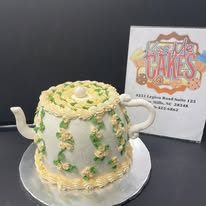
Send a small set of clear references, explain what you like in each one, identify must-have and flexible details, and let the bakery translate the idea into a design that fits your event and its actual capabilities.
Use photos to explain direction—not to avoid details
A photo can show style quickly, but it cannot tell the bakery your event date, serving count, budget, flavor preferences, transportation plan, exact wording, or which decorations are essential. Treat images as part of the brief, not the entire brief.
For every photo, add one sentence explaining what you like. For example: “I like the color palette, but not the flowers,” or “I want this general shape, but with our school colors and the graduate’s name.” That sentence prevents the bakery from focusing on the wrong feature.
Send fewer, stronger references
Ten unrelated screenshots can create more confusion than one or two well-chosen images. Select references that point in the same general direction. If one image is elegant and minimal while another is crowded and highly sculpted, explain which direction should lead.
A practical set may include one image for overall shape, one for color, and one for a specific detail such as piping, flowers, a number, or a topper. Label them clearly instead of asking the bakery to merge every element automatically.
Identify the must-have details
Make a short list of elements that define the event. These may include the person’s name, age, school, rank, team, favorite color, anniversary number, wedding palette, or a specific message. Keep the list realistic and ranked.
If everything is called “must-have,” the bakery has no room to adapt the design to the cake size, serving needs, available materials, budget, or time. Choose the two or three details that would make the cake feel personal even if secondary decorations change.
Separate color from texture and structure
Customers often say they want a cake “just like this” when they mainly mean the colors. Be specific. Do you like the pastel palette, metallic accents, smooth finish, buttercream texture, floral arrangement, tier height, or three-dimensional structure?
These choices can require different techniques and amounts of labor. A color match is not the same request as a sculpted replica. Explaining the category helps the bakery evaluate the real work involved.
Share the event context
A design should fit where and how it will be used. Tell the bakery whether the cake is for a child’s indoor party, an outdoor graduation, a formal wedding, a military celebration, an office retirement, or a community event. Include the venue area, event time, pickup distance, and display conditions.
A design that photographs well in a studio may not be practical for a long drive, outdoor heat, a crowded table, or a venue with limited refrigeration. Event context allows the bakery to ask the right handling and structure questions.
Do not assume every online cake is fully edible
Internet photos may include display dummies, hidden supports, printed toppers, acrylic pieces, toys, fresh flowers, wires, dowels, boards, or other non-edible components. Some images may also be heavily edited or photographed from a single flattering angle.
Ask how the bakery would interpret the design for a real serving cake. Confirm which pieces are edible, which must be removed, and whether the final design will use different materials or construction.
Expect adaptation instead of an exact duplicate
A strong custom order should feel personal to your event, not like a blind copy of another customer’s cake. A bakery may need to adjust proportions, decoration placement, materials, colors, or structure to fit your servings and the techniques it uses.
Ask for the overall feeling and key elements you want, then allow room for a bakery-specific interpretation. This produces a clearer creative partnership and reduces disappointment caused by expecting a photograph to function as a fixed blueprint.
Connect the image to servings and budget
An elaborate reference made for a large tiered cake may not translate directly to a small serving count. Likewise, a compact cake may still require significant labor if it includes detailed sculpting, hand-made decorations, or complex finishing.
Share the expected servings and a realistic budget range when you have one. Then ask which parts of the inspiration can be preserved and which can be simplified. A good request focuses the available work on the details that matter most.
Write a usable inspiration brief
A complete brief can be simple:
- Event date, event type, and expected servings
- One main inspiration photo and up to two supporting images
- What you like in each image
- Must-have name, wording, age, number, or theme
- Preferred colors and colors to avoid
- Details that may be simplified or changed
- Pickup and transportation information
- Budget range or priority level when available
This gives the bakery enough information to respond honestly instead of guessing from a screenshot.
Show what you do not want
Negative direction can be as useful as positive direction when it is specific. Instead of saying “I do not like this cake,” explain whether you want less height, fewer decorations, softer colors, no metallic finish, no flowers, no character figure, or a cleaner layout. This helps the bakery avoid repeating elements that conflict with your event.
Keep the list short and practical. A long list of dislikes can make the design impossible to interpret. Pair each major concern with a positive direction, such as “no bright red; use burgundy and gold,” or “no crowded decorations; keep the name and age as the main focus.”
That contrast gives the bakery a usable boundary without forcing it to reverse-engineer your taste from silence.
Use the gallery to understand the bakery’s own style
Before requesting a design, review work the bakery has actually shown. This helps you understand its visual range and gives you stronger references than sending only photos from unrelated creators. You can view custom cake work from Kiss Me Cakes in Hope Mills and use the gallery to explain which local examples connect with your event.
Availability, design acceptance, pricing, and final details must still be confirmed directly. Inspiration creates direction; confirmation creates the order.
Common inspiration-photo questions
How many inspiration photos should I send?
Usually a small, focused set is easier to interpret than a large collection. Explain what you like in each image.
Will the final cake look exactly like the photo?
Do not assume an exact duplicate. Servings, structure, materials, budget, timing, and the bakery’s methods may require adaptation.
What if I only like one detail from a photo?
Say that directly. Identify whether the useful detail is the color, piping, shape, texture, flowers, topper, lettering, or overall mood.